Our second AI-supported working paper is out: The Intellectual DNA of the Turkish Competition Board: Mapping Three Decades of Case Law Through Citation Networks, written with Cansu Peker and Melih Üyer.
The setup is easy to state and was, until recently, impossible to do. An AI model read all 9,995 published decisions of the Turkish Competition Board — three decades of case law — and extracted the 18,513 citations connecting them. Network analysis did the rest.
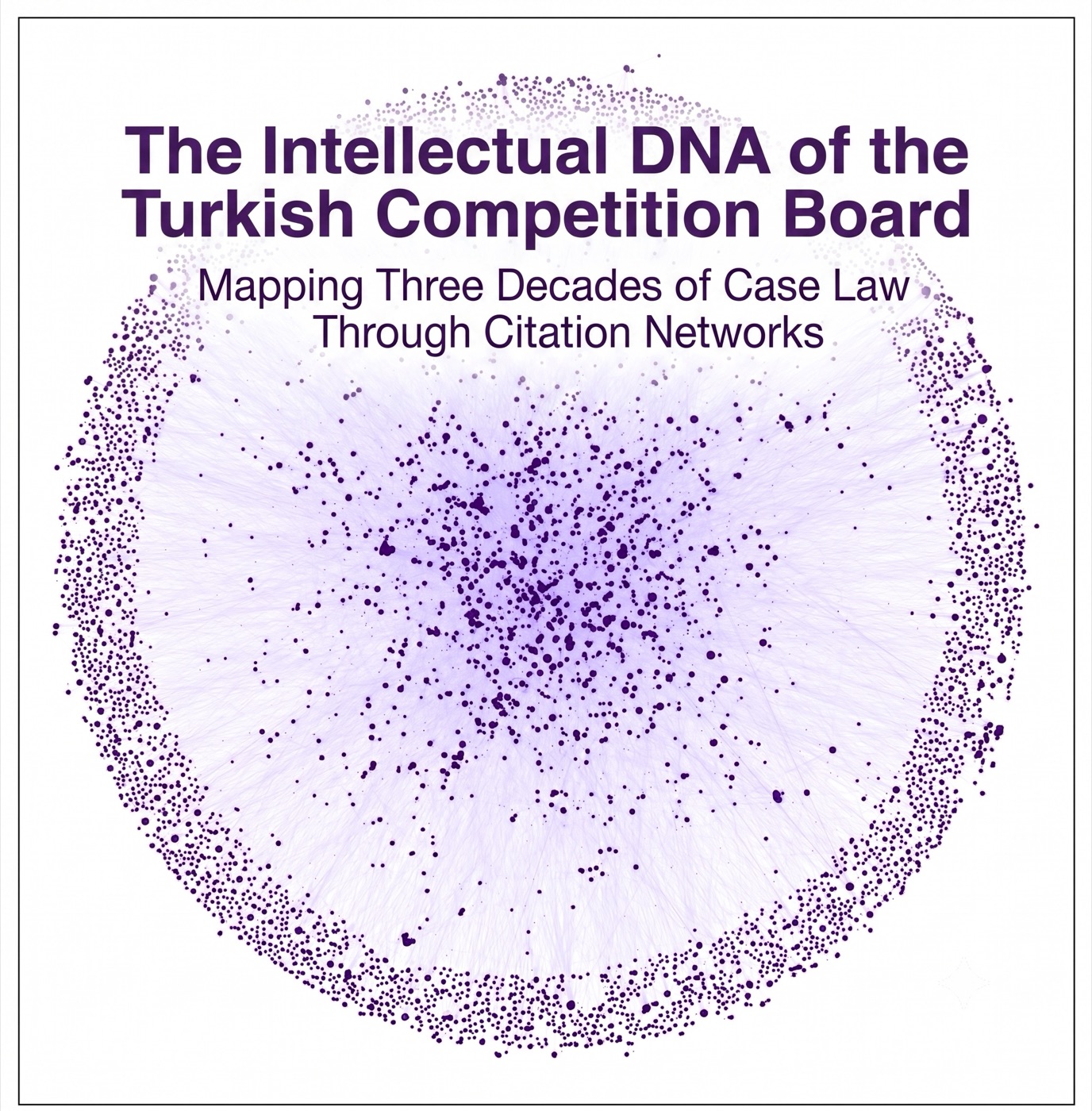
Three findings stand out.
Influence is scarce. The Board's most influential decision attracts just ten direct citations. In a body of nearly ten thousand decisions, no single landmark towers over the rest.
Reliance on EU case law follows a U-curve. Dependence in the early years, autonomization in the middle period, re-engagement more recently.
The canon forms fast. Doctrine-shifting decisions become the canon within three years. What predicts a decision's staying power is how fast it gets cited.
The paper continues what we started with the quarter-century analysis we published last November: treating a regulator's entire decision record as one dataset, and letting AI do the reading no team of humans could. This time the question was structural — how the Board's reasoning holds together across thirty years, which decisions everything else leans on, and where the doctrine shifts.
The full paper is on SSRN. Comments and feedback are very welcome.